
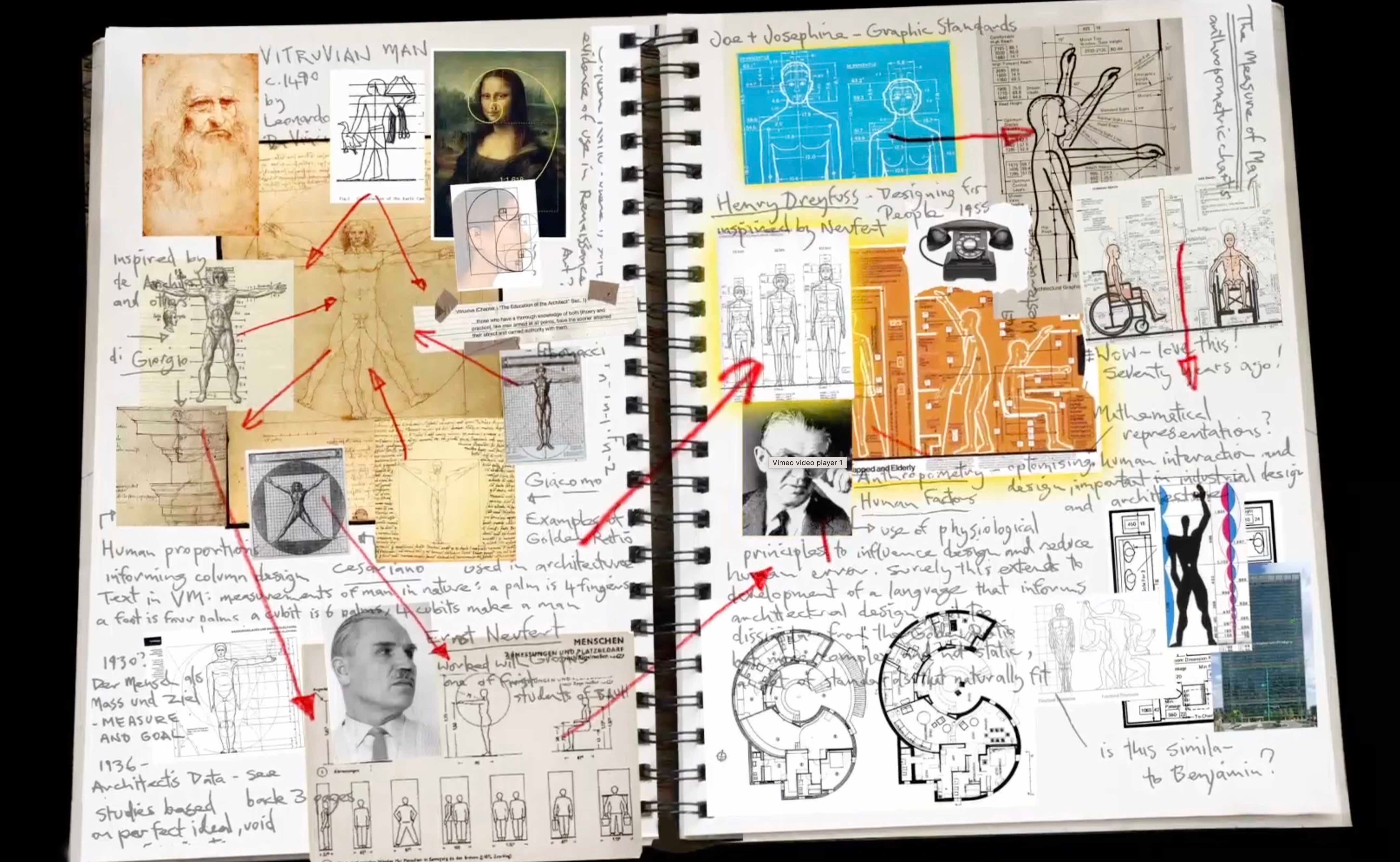
A researcher is investigating the legacy of Leonardo Da Vinci’s ‘Vitruvian Man’ which has influenced designers and architects for hundreds of years. But does this idealised form address human diversity and the complexity of the world today. As her notebook fills with ideas she wonders about the relevance of her work. How does it build on and extend the work of others, and how does it become part of a wider development of interconnected knowledge?
Donna Haraway
As researchers in a digital world we navigate using search engines that index our information but remove its meaning and context. When we digitise our work in structured mediums like spreadsheets and databases we lose not only meaning and context but also the dynamic connections that our minds create. In order to structure and build knowledge we need to design technology that encourages and captures human thinking in a structured but flexible way.
Leonardo da Vinci said
“Learn how to see. Realise that everything connects to everything else.”
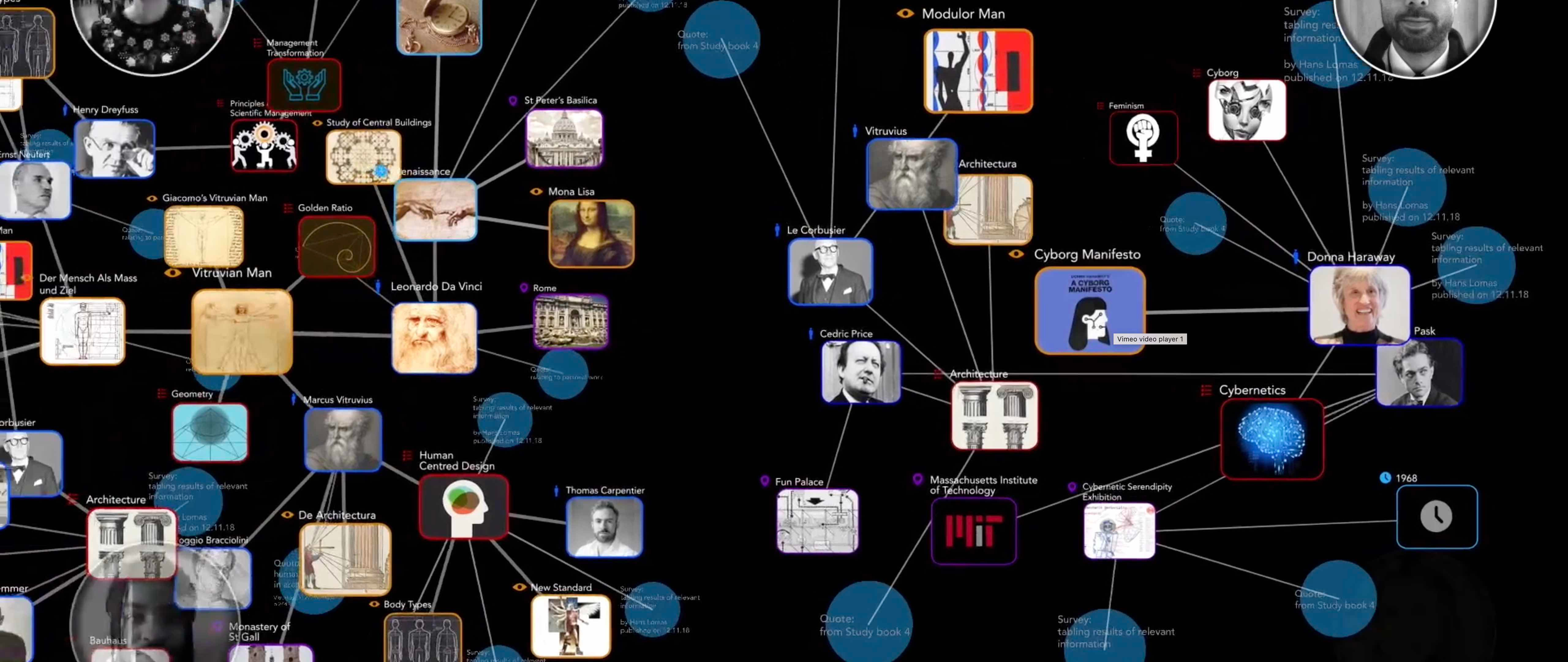
ResearchSpace places focus on the network of relationships that define us and our world. In ResearchSpace the conventions of databases and spreadsheets are replaced by a knowledge map. A flexible canvas that allows researchers to evolve without boundaries a constellation of actors, places, events, objects, concepts, ideas, and practices. Every item in the map is defined by its connections which are not simply labels and lines, but meaningful relations interpretable by a computer. While they may look like a mind map, knowledge maps express your research processes, thinking and information as they evolve. Through its visual medium you can work with data at different levels of detail developing your knowledge and ideas and incorporating them as evidence, beliefs, and arguments alongside other contributors.
Heraclitus the philosopher said,
“The only constant of life is change.”
New knowledge can change our understanding of the past. ResearchSpace can reflect this evolving history rather than leaving the past frozen in time. Researchers can, through a range of tools, continually understand, interpret, expand, and annotate the knowledge map contributing their discoveries and allowing them to compare and reconcile their different vantage points.
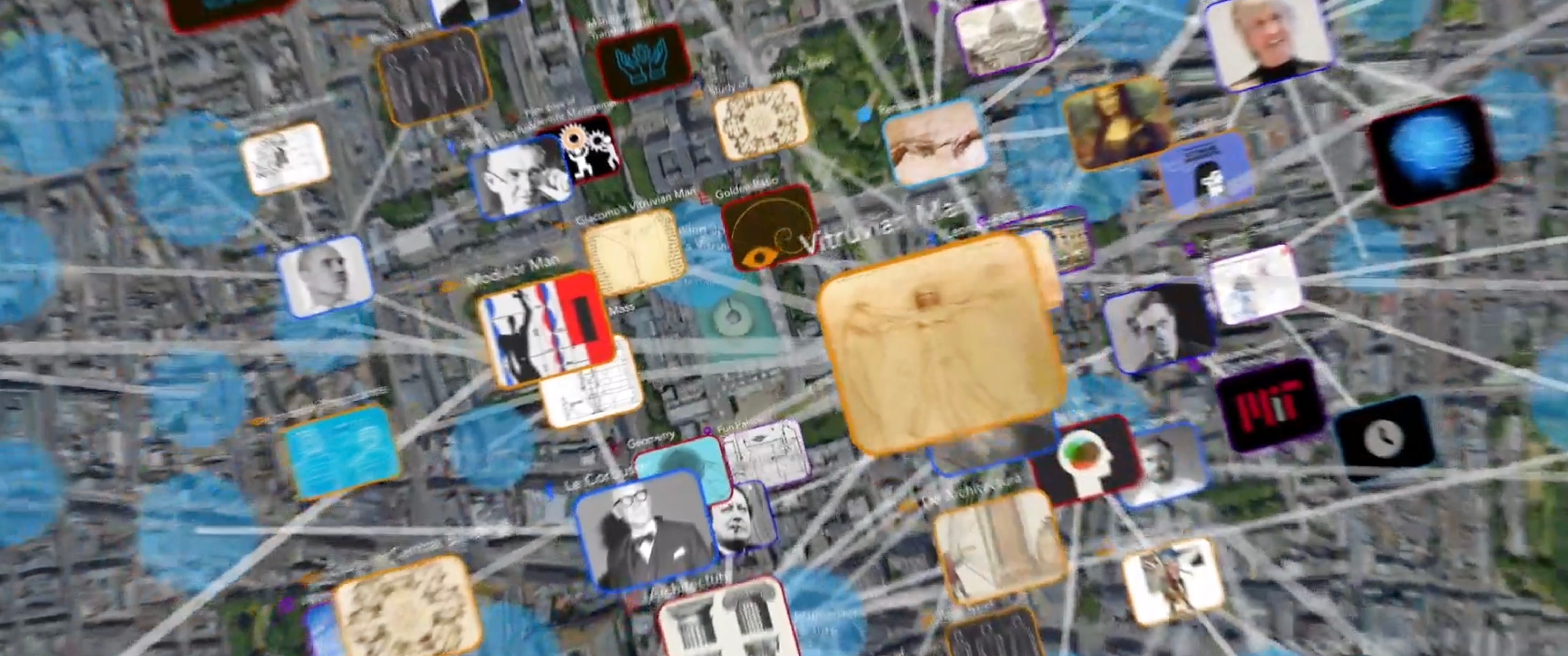
As well as visualising the knowledge map, ResearchSpace generates different views of the data through maps, timelines, diagrams, and graphs. These views can be woven into a new type of evolving narrative, one that can embed your research processes and information which will reflect new research and discoveries as they arise. As the narrative evolves this generates more ideas which can be used to grow the knowledge map.
Walter Benjamin the philosopher said,
“Nothing that has ever happened should be regarded as lost for history.”
The knowledge generated and represented and ResearchSpace is not locked in. Computers can understand and process every entry in the knowledge map and the relations between them. The knowledge maps are expressed in an open data format which both preserves contextual meaning and is designed to make integration of data easier allowing future scholars access to previous chains of evidence, beliefs, and arguments. As more people collaborate using ResearchSpace, new knowledge maps will start to connect to each other. These super maps will bring together previously fragmented research from different vantage points confronting contradictions but help us understand a new and wider significance of both the past and the present. Through ResearchSpace our evolving knowledge of the world can be better reflected in a digital space.